Showing posts with label preschool classroom. Show all posts

Sunday, September 18, 2011

Falling into Sensory Play

I love this time of the year here in Florida. We have the best of both worlds; cool in the morning, warm in the afternoon. I know it's confusing for fashion, but for a girl that does not like cold weather, it's my cake and pie, too!

It also causes a creative fever for teachers and so today my Taylor and I put on our sweaters and went exploring on our property for all things turning fall for a sensory box to add to my classroom. You can go cheap with these things and they keep kids exploring and engaged!

We started with a  cardboard box that held drinks and added rocks to the box.

Then we began to explore the back field where we began to find some things fallish. It's hard here at this time of the year, but we found what we needed.


It doesn't take long before our box is full and I have to stop myself from adding any more. If you are able to take your children on a nature walk to find all things fall, this is a great hands-on activity that teaches exploration, scientific thinking, classification and much more.

All in all my new sensory bin for the week didn't cost me a thing except a beautiful walk in the yard with my daughter, which I'm willing to pay.

Keep in mind that sensory play is one of the most extraordinary tools you can use in an early childhood classroom. It is calming, focus-effective and introduces or enhances spatial awareness for children.

The end result is beautiful and I can't wait to take it and share it with my little kiddos!

Saturday, April 23, 2011

Nature's Gift To Early Childhood


It's Saturday morning, my eyes are searching over the grassy, green field that sweeps our back field. I am thrown back by the beauty of nature and all that it has to offer. As we are deep into spring and headed for the dog days of summer, what are you doing in your classroom to promote such beauty and grace?

The early childhood classroom is much like the grassy field that envelops my eyes this morning. Or at least it should be. It should be open for possibilities, free to express sound, room for seeds to be sown and learning to be draped over each and every child just as the Laurel Oaks are canopied with new life.

Early childhood is the start of something beautiful. It's fresh and new, it's pliable, it's moldable, it's the chance to shape a world. However, in most cases it is not any of these things.

Take for instance, the habit of television in an early childhood classroom, the strict schedule of routines that really aren't child-initiated, but more teacher-directed for their purpose, the closed opportunities such as color this pre-drawn tree green because all trees are green, or the one-child-at-a-time table session. Oh this one is my favorite. You know, the one where each child has a tree ditto in front of them and they are told to not touch it, do not touch the paint, do not touch anything while the teacher holds the paint brush for each of them and paints inside the lines of the tree. After a long while, she proceeds to the next child and so on. Oh my goodness, I know I would have been the child to get up running from the classroom as soon as the door opened yelling, "Save me before my adult life is crushed by the closed opportunities that wait before me!".

Why is it that we can't get passed the controlled nature of teaching? Why is it that teachers can't let-it-go? Why are they so stuffy?

Many times it is out of shear laziness. Now I am being honest, it's my down-fall most days. I can't help with that problem, but sometimes it is out of a lack of knowledge. Many teachers in the early childhood field are given a quick set of trainings required by their state then thrown overboard into the classroom without a life preserver. Man overboard! That I can help with.

I want you to imagine a world with no limits, no boundaries, no one telling us NO. The joy of living each and everyday open to possibilities, the feeling of I'm safe, the urgency of learning, the excitement of a story. This should be your early childhood classroom. Each day a child should know that they will walk through your door and learn something new, feel safe and comforted, have anticipation to hear the story you're going to read, and know that if they are told "no" it's because of their safety and not because they can't paint today.

As the winds blows through the field and the sun peaks through with a new day, allow yourself to blow with the flow and take a peak at the something new a child will learn from you each and everyday. It's easy, so go ahead and release!

Until next time...go teach the children!
Priscilla

Thursday, March 3, 2011

Snoring Is Boring Unless You're My Friend Bear


Recently, I was asked to be a featured blogger for ABC and 123 A Learning Cooperative and I have to say that I was flattered. Now, for those of you that do this all the time, it's probably not that big of a deal to you, but for me...I was super excited! I was asked to share about reading, which is right up my path of teaching.

I love working with books in a preschool classroom. When I was an actual teacher in a preschool classroom, I used a book-of-the-month method and it just worked beautifully. My children learned all about the books I featured, the attributes of the books (front, back, title, author, illustrator, etc), and I want to believe they learned to have a love of books through this process.

One fall, I decided to do our book of the month featuring Bear Snores On by Karma Wilson and illustrated by Jane Chapman. This is one of my favorite books of all time to read preschool children. There are so many learning opportunities in the book and as the series grew, so did my ideas.

First the book is a rhyming book and we know that phonological awareness and onset and rime is vital to the success of a child reading. If they can begin to put the symbols together to form words, decode and then change the rime to make more words, they will read.

"In a cave in the woods,
in his deep, dark lair,
through the long, cold winter,
sleeps a great brown bear."

I have always thought that I have a knack for making something out of nothing or something small. I challenge you to think about this paragraph and how it can be expanded into greater literacy knowledge.

  • first thing we notice is that it rhymes: demonstrates beginning phonological awareness
  • the lair isn't just a lair, it's a deep, dark lair: uses descriptive words
  • the use of a synonym: cave is the same as lair
These are just a few of the literacy skills that can be implemented by using the book. As an early childhood teacher (any teacher for that matter) you should never just look at book and read it page by page without really picking the words of the page apart. You should always be thinking, "How can I use the words and pictures on this page to extend the learning potential?".

Page after page the repetitive nature of the book suggests that the bear snores on...this use enables the children to predict text and begin to coral read as a group. Pretty soon they can read the book in its entirety. The key is repetition. And the key to great repetition is creativity. So on to the fun stuff we go.

As I read this book time and time again in my class of three-year-olds, we started exploring the different elements happening. We figured out by the pages in the book that it was winter time. And from there it became a question of what type of animals sleep (hibernate) in the winter? How long do they hibernate? What are all of his friends doing up partying? Why is the rabbit called a hare?

These are inquisitive questions that little minds need to know. So you teach them and you explore with them and you ask their thoughts and opinions.

We worked hard through the week painting our cave or lair (a very expensive box) and we prepared for our bears to enter their deep sleep (I rhymed!).

As the week came to an end we had to put our bears asleep for the winter. Each of the children brought in a bear from home, we labeled them with their names (because all bears have names), we snapped a photo of a moment in time and we carefully put them down to sleep.


Three months later (no kidding), the bears came out of hibernation in the middle of night and they made a mess in our classroom (I can't believe that I didn't capture this moment with film, but I didn't!) with paint, play dough, blocks, there was even one sitting in the rocking chair doing circle time! The oohs and awes on their faces were too much to BEAR.

When you think about reading a book, don't just read the page, read the story that the page tells. Go beyond the words and bring the story to life as we did. Children learn by doing; their learning is three-dimensional. Don't bore them with flat words, flat pictures, and flat tone. Deep, dark lair should be DEEP, DARK LAIR. "Mouse squeaks, "Too damp, too dank, too dark."", should be "too damp, too dank, too dark" (itty, bitty voice).

Overall the book shares about friendship, consideration, and problem-solving. Bear goes from mad to sad to happy. Emotions are a big part of early childhood, use this to talk about feelings and how we can deal with those feelings even at a young age.


In the end, bear is awake and as spring roles around Bear Wants More. So off I go to plan another Bear adventure...


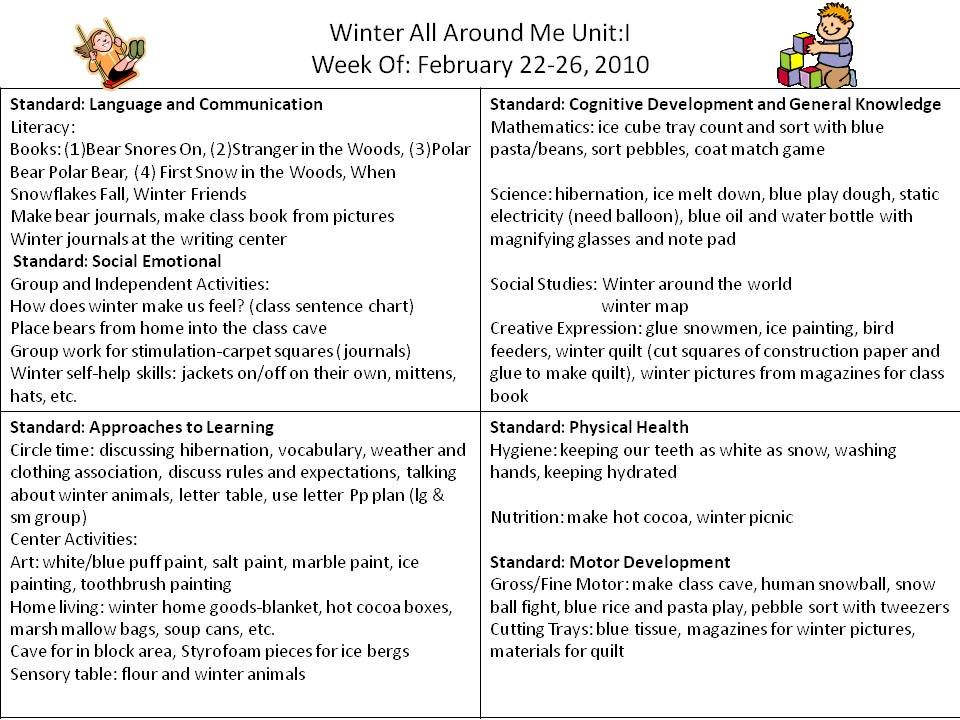
Below is a unit that I created when I facilitated a workshop about lesson planning. I used Bear Snores On as a part of the unit and inspiration for activities.
http://i832.photobucket.com/albums/zz249/family4jones/FromBlahandBoringtoLearningandSoaringslideshow_008.jpg


I hope that you enjoy reading about my Bear adventure. Although Bear Snores On is not part of my Barefoot Books, I hope that you will add it to your collection. There is a series of Bear books, so happy reading my friends.

Sunday, February 27, 2011

Preschool Library Barefoot Additions

Looking to spruce up or add to your preschool library? What better way to do it, than to join my Barefoot Books team as an Ambassador.

When your preschool or school joins Barefoot Books, you can begin adding a beautiful collection of books to your library at a fraction of the cost.  Here are a few perks to going Barefoot!
  • earn 20-40% commission on qualifying sales (personal orders and orders placed my customers whom you refer to Barefoot Books)
  • build your team and earn 2-8% of the qualifying sales volume of team members, three tiers down.
  • place a stock order and receive free shipping and 50% discount on orders of $500 or more
  • gain loyalty points which can be used as payment on future purchases of Barefoot Books products
  • receive free access to your own website marketplace, online marketing tools, Ambassador-only forums, training resources and more
There is no better time to join Barefoot Books. As a preschool or school, you can stock up with stock orders and pay only $250 for $500 in retail value and get free shipping. Plus, you can promote fundraisers for your school getting parents/grandparents to shop your marketplace. You earn commission and points! Take a stock order and display it for an in-house store for parents to browse and purchase.

Join my team and start your own successful opportunity of giving children a love of reading.

Wednesday, February 17, 2010

Preschool Lesson Planning Coming Soon

Do you ever feel frustrated with lesson planning? Are you intimidated by them?

In the coming weeks I will be posting training information on how you can develop lesson plans that will send your classroom learning experiences through the roof. I want you to know that lesson planning does not have to be so hard and so time consuming and so expensive. I will show you how to create a unit on a shoe string budget and still get fantastic learning results for your children. Until then...

Tuesday, January 19, 2010

Let's Play Dough

I will begin to post some of the past trainings that I have done. These are the power point slide shows that accompanied the training. Please feel free to take a look at them and enjoy.  Play dough can be such a powerful tool in the preschool classroom. I will post recipes soon.
http://apps.facebook.com/slideshare/slideshows/user/100000664307647

Tuesday, January 5, 2010

Lesson Plans for Preschool

Next month I will be facilitating a training that will focus on lesson planning in the preschool classroom. Why is it that we let them imtimidate us so? This workshop will change the way that we approach them and transfer those great ideas to paper.

I will focus on how our classrooms are like the butterfly and the transition that it takes before it is what it is, "one of God's most beautiful creatures".

Check back soon for my link between the two and what both of them have to do with lesson planning.

Monday, September 14, 2009

Writing in the Preschool Classroom

When we think of writing, we think of letters and numbers that we can read and that make sense, otherwise why would you read it.

Writing in a preschool classroom is much different from our everyday writing. It seems to only make sense-at times-to the writer, can only be read by the writer, and can-at times-only be seen by the writer. What kind of writing is this, you ask? It is the writings of a preschool child. Their imaginations have taken over and their words begin to make sense when they can apply it to paper.

Here’s the catch...Have you ever seen a child come out of the womb writing letters and symbols that are aesthetically correct? If so, you have witnessed a miracle. The fact remains like any other developmental milestone, writing is a developmental progression that takes years to master. And this is why writing-rich classrooms are so important.

Writing Centers are specific areas within the classroom that encourage writing by providing interesting writing materials and appropriate models. Tracing letters are not appropriate. Focus on free-form writing.

Class Books allow each child to contribute an individual page to a group book. Sometimes the basic text is predictable but allow children to make small changes.

Pocket Stories encourage children to explore word boundaries and the relationship between spoken and written language. Children dictate a sentence to go with a picture they create. Duplicate words can be matched to the words in their sentence and stored in the pocket at the bottom of the page.

Journal Writing is common in many kindergartens. Journals allow teachers and children to trace writing progress over an extended period.

Sentence Fill-Ins allow children to experiment with writing by adding a word or phrase to a predictable text. Children can observe how their writing alters the meaning of the original text.

Writing on Interactive Charts enables children to experiment with the way writing conveys meaning. Children can write a word or phrase to add to the interactive part of the chart.

Literacy Suitcases extend the literacy curriculum from school to home. Literacy suitcases are take-home version of classroom writing materials.

It is extremely important at the preschool level for children to interact with print. This means that your classroom should be a print-rich environment. Children should be allowed to explore books and printed materials on their own and as a group. There should ALWAYS be printed materials on their physical and developmental level in the classroom. They should ALWAYS have access to writing materials at a specific place in the room. Use an old table or even a corner of the room with a basket of materials, a clipboard and a chair or bean bag. Even if we don’t have the luxury of space and new furniture, there is always something that can be used for this purpose. Materials could include: pencils, crayons, markers, paper of any kind, magnetic boards, magnetic letters or laminated letters that they can stick to Velcro on the wall to form words. Anything in your classroom can and should be used to enhance the reading and writing experience.

To further the writing experience, materials should be present in each center in your classroom. Examples could be notepads for order taking in the home living center, pads for drawing buildings in the construction/block area, or paper to write hypothesis and experimental thinking in the science center.

Take this new year to begin thinking about how you can incorporate a developmentally, fantastic writing center into your classroom. Enhancing the writing experience will make a dramatic difference in your children’s ability to begin recognition of letters, phonemic awareness, and of course writing.

Tuesday, August 25, 2009

Organized Chaos in the Preschool Classroom


Well, we are actually in our first week of school, so pre planning didn't get blogged. That tells you just how busy I have been. It has been a whirlwind during the past two weeks and I am tired to say the least.

During the week of pre planning I had a lot to go through, organize and get rid of. I took over a site, so I basically had to start from scratch. When our classrooms are cluttered, it creates a chaos that can not be described. Much like our homes, when we remove the clutter from our lives they seem to simplify themselves.

As an early childhood teacher, you have to be organized. The preschool classroom is not a place for scattered thoughts. When children arrive in the morning, you have to be ready, when you go out onto the playground, you have to be ready, when they wake up from their naps, you have to be ready; do you get what I'm saying?

When you begin your lesson plans, think in units or themes. Have those items prepared ahead of time down to the outdoor activities that will accompany you. I like to use 2-gallon zip lock bags for outdoor activities. I place a label on the bag and it will go with me in line with the children. Organize your sand table and water table themed objects and activities in those bags, you will see a big difference in your transitions.

Again with the lesson plans, think in themes. Have things organized into bins or large bags labeled with your theme for that week or month. Do lesson plans two weeks in advance at least, so that items can be purchased and prepared in advance with time to spare if something comes up. We know that our days never go as planned, so being organized is key.


Now onto setting up your classroom. The environment for a child is essential in the learning process. There should be at least these learning centers in your classroom: writing, math/science, home living, art, blocks/transportation, library, and circle time learning area. Some to add are: wood working, computers, and listening. You should have sensory tables or bins in your setting daily. These sensory tubs and micro play activities are key in behavior modification and personal space recognition. If you have any questions about sensory play or micro play, please post them and I will get back to you as soon as possible. I will be writing a blog about micro play in the near future.

Until the next time we meet, remember that little lives are depending on you...